Why Secure Remote Access Is Now a Daily Business Concern
A few years ago, remote access was often used only by a few employees. Today, it is part of daily work.
A finance officer may review reports outside the office. A store manager may check branch data after closing. A warehouse supervisor may update inventory from the floor. A production lead may access files from another site. A branch employee may use a business app from a tablet.
Each login may look simple. But together, these logins create a bigger business question: how much access should each user really have?
If access is too broad, the business becomes harder to protect. A user may connect from an old device, a public network, or a location outside the office. A password may also get exposed through phishing or poor password habits. When that happens, the business needs more than a login screen.
Secure remote access helps reduce that risk. It gives teams a safer way to reach the apps they need while helping IT teams manage access more clearly.
For Philippine businesses, this is important. The Department of Information and Communications Technology has highlighted the need for a trusted, secure, and reliable cyberspace in the National Cybersecurity Plan 2023–2028. As more businesses depend on digital tools, secure remote access becomes part of daily protection.
For Philippine companies exploring Sophos Philippines options, the urgency is practical: work needs to move, but access should not be wider than necessary.

What Secure Remote Access Should Mean for Today’s Operations
Modern secure remote access should not be limited to asking, “Can this person connect?”
A better question is, “Should this person, using this device, access this specific application right now?”
That small shift matters. It moves access control away from broad permission and toward verified, policy-based access. For business teams, this means secure remote access should support work without creating unnecessary risk.
In today’s operations, secure remote access should help businesses check who the user is, what device is being used, what application is being requested, and whether the access follows company policy. It should help IT teams manage access clearly, especially when employees, branch teams, third-party users, and remote workers all need different levels of access.
This is also where data breach prevention becomes more operational. A business cannot protect sensitive information only by reminding people to be careful. It needs systems that help limit access, verify users, and reduce the chance that one compromised account can reach more applications than it should.
For retail, manufacturing, fashion, and F&B businesses, secure remote access should keep work moving while making access more intentional. It should not slow down approvals, reporting, or coordination. It should simply make access safer and easier to control.
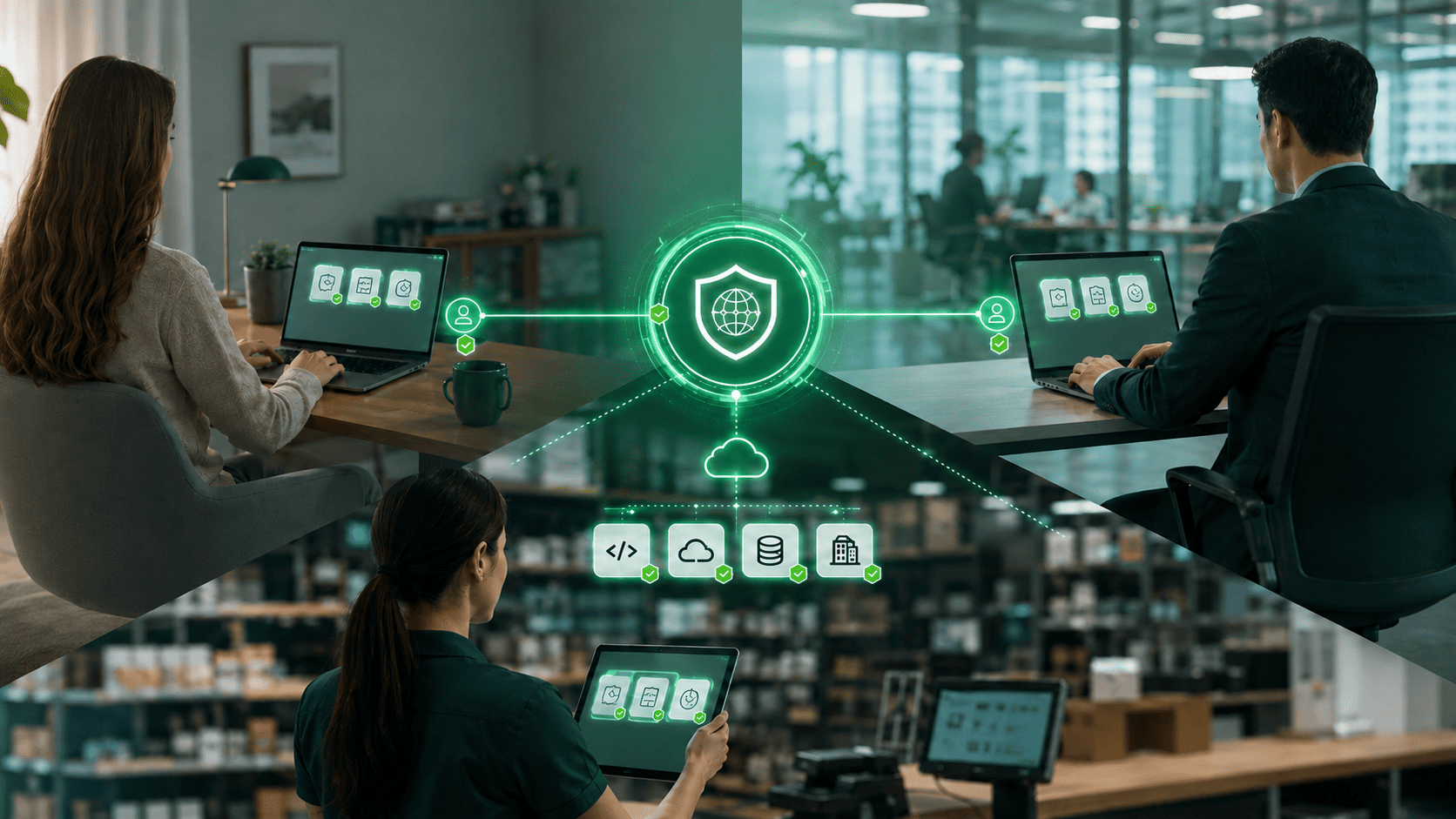
Traditional remote access may no longer be enough
Traditional VPN access helped businesses support remote work for many years. It gave employees a way to connect to company systems even when they were outside the office. But as business operations became more distributed, VPN access also became harder to manage.
The challenge is that a VPN often focuses on connecting a user to the network. Once connected, the user may have broader visibility or access than what their role actually requires. This can become risky when businesses have more users, more applications, more branches, and more devices.
The risk becomes more serious when credentials are compromised. Attackers do not always need to “break in” when they can use valid accounts. If a compromised account has broad access, the business may face greater exposure across files, applications, and systems.
That is why many businesses are now looking for a VPN alternative. A modern VPN alternative should not simply replace one login method with another. It should help reduce broad network exposure and make secure remote access more specific.
Sophos ZTNA is designed around this need. As a VPN alternative, Sophos ZTNA helps businesses shift from network-level access to application-level access. This supports stronger data breach prevention because access is more controlled and more aligned with what each user actually needs.
What is Zero Trust Network Access?
Zero trust network access is a security approach built on a simple idea: do not automatically trust a user or device just because it is inside the network or has login credentials.
Instead of assuming access is safe, zero trust network access verifies access requests based on identity, device condition, policy, and the specific application being requested. This makes access more precise and more protective for modern business environments.
Zero trust network access does not mean blocking people from doing their jobs. It means removing unnecessary trust from the access process. A user may be allowed to access one application but not another. A device may be allowed only if it meets the company’s security requirements. A request may be approved or denied depending on policy.
For business leaders, the value of zero trust network access is easier to understand this way: it helps make access decisions based on need, not assumption.
This is important for data breach prevention because many incidents begin with misused access, compromised credentials, or exposed systems. By applying zero-trust network access, businesses can reduce the chance that one weak access point opens more of the environment than necessary.
Sophos ZTNA brings this zero-trust network access approach into a practical solution for businesses that need safer access to applications without relying only on traditional perimeter-based security.
What Sophos ZTNA Actually Does for Your Business Applications
Sophos ZTNA helps businesses control access to applications and web resources through a zero trust approach. Instead of giving users broad network access, Sophos ZTNA gives users access only to the specific applications they are allowed to use.
This is the core value: secure remote access becomes application-specific.
For example, a branch manager may need access to inventory reports, but not finance records. A warehouse supervisor may need access to logistics dashboards, but not HR files. A third-party vendor may need access to one approved system, but not the wider company network. Sophos ZTNA helps create this kind of controlled access.
Sophos ZTNA can also help check device health as part of access policy, especially for agent-based access. This means businesses can consider not only who the user is, but also whether the device is trusted and compliant. That is important for companies where employees use laptops, tablets, or devices across different work environments.
Another important value is visibility. Sophos ZTNA is managed through Sophos Central, giving IT teams a more centralized way to manage access. For businesses already looking at Sophos Philippines cybersecurity solutions, this can help simplify how access is controlled and monitored.
In practical terms, Sophos ZTNA supports secure remote access by helping businesses answer: who should access what, from which device, and under what conditions?
Sophos ZTNA vs VPN: From Network Access to App-Level Control
The easiest way to understand Sophos ZTNA is to compare it with VPN.
A traditional VPN usually connects a user to the network. That can be useful, but it may also open access more broadly than needed. In a growing business, this can create risk because not every user needs access to every system.
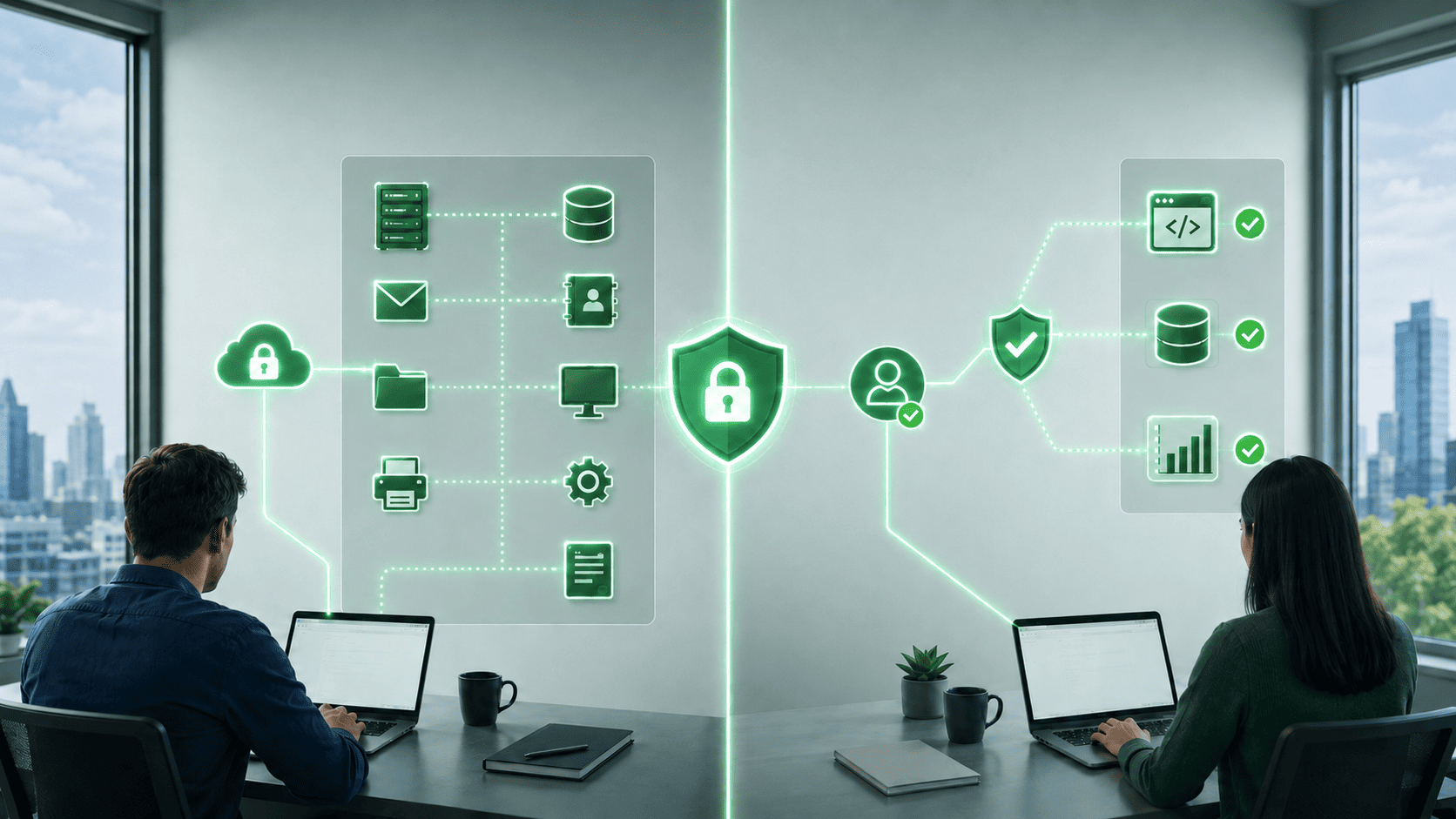
Sophos ZTNA works differently. It focuses on giving verified users access to specific applications, not the entire network. This makes Sophos ZTNA a stronger VPN alternative for businesses that want more control over access.
Think of VPN as opening a large hallway into the business network. Think of ZTNA as opening only the specific room a user is allowed to enter. That is the business difference between broad network access and app-level control.
For teams handling customer data, employee records, branch reports, inventory files, and financial information, that difference matters. A VPN alternative like Sophos ZTNA can support data breach prevention by reducing how much a user or compromised account can reach.
This does not mean every business should remove VPN overnight. It means businesses should review whether their current remote access setup still fits their risk level, operations, and growth. If secure remote access has become harder to monitor, Sophos ZTNA may be the more practical VPN alternative to consider.
Where Secure Access Matters Most: Retail, Manufacturing, Fashion, and F&B
Secure remote access becomes more important when a business has many people, locations, and systems working together.
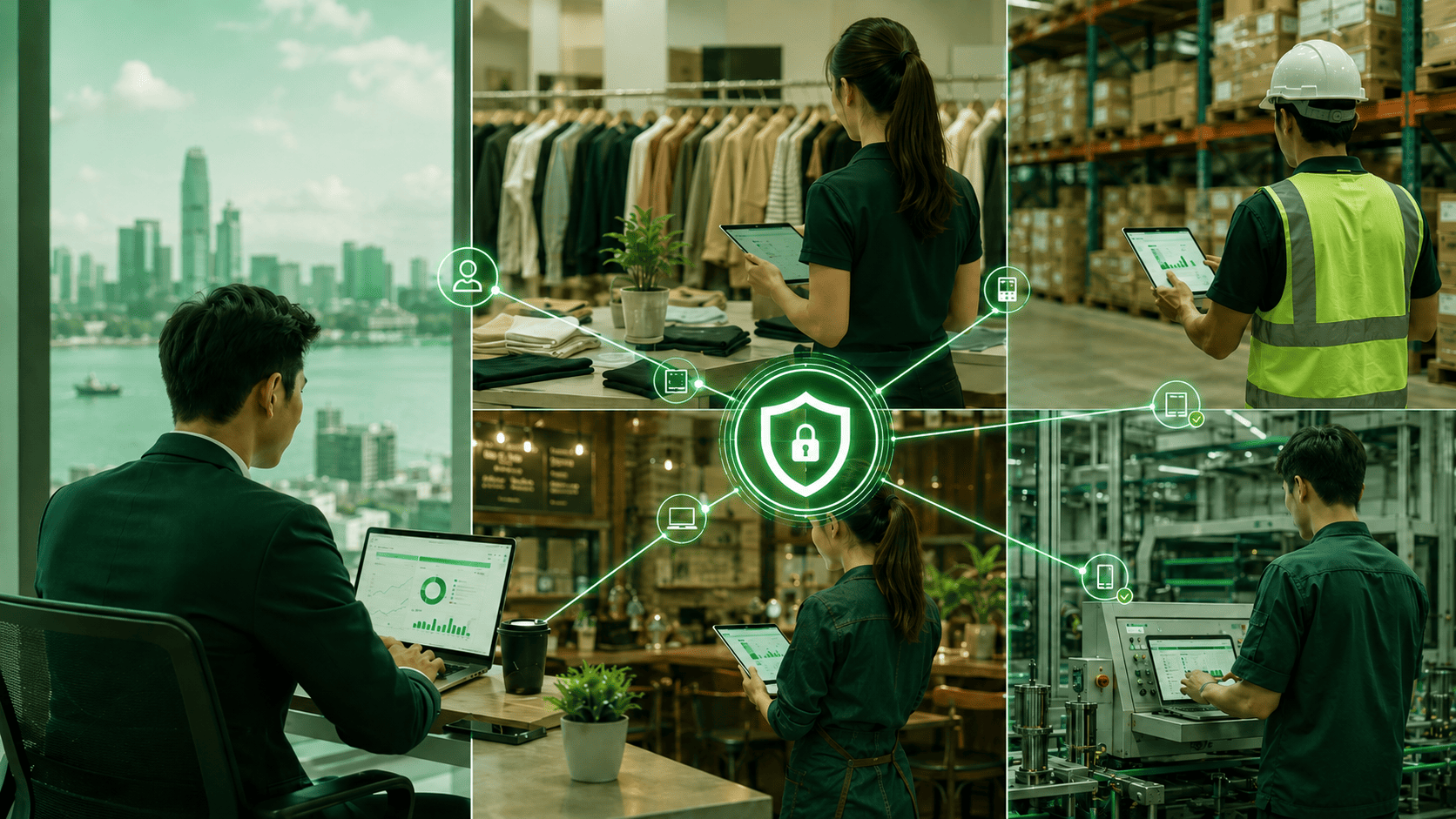
In retail, store teams may need access to sales dashboards, inventory systems, customer-related records, promotions, and branch reports. The head office may need to support multiple locations without giving every user the same level of access. Secure remote access helps keep branch work connected while reducing unnecessary exposure.
In manufacturing, teams often work across production, warehouse, procurement, finance, and supplier coordination. A supervisor may need production data. A warehouse user may need inventory updates. A manager may need reports across locations. Secure remote access helps each role access what it needs without opening the wider network.
In fashion, teams may move fast across merchandising, design coordination, e-commerce, store replenishment, and supplier communication. If access is not controlled, sensitive business data may become harder to protect. Sophos ZTNA helps support secure remote access for these connected workflows.
In F&B, branches, commissaries, operations teams, and back-office teams may all rely on shared systems. Sales reports, employee records, recipes, supplier files, inventory data, and customer information must be accessible but protected. This is where secure remote access, data breach prevention, and better access policies work together.
For these industries, a VPN alternative is not just a technical upgrade. It is a way to support daily work while reducing risk. Businesses searching for Sophos Philippines cybersecurity support can use Sophos ZTNA as part of a more practical approach to securing branch, remote, and application access.
Sophos ZTNA: Safer Access Without Slowing Down Work
Good cybersecurity should protect the business without making work unnecessarily difficult. That is why secure remote access must be designed around how teams actually operate.
Sophos ZTNA helps by giving users access to approved applications without exposing the entire network. This supports safer access for remote workers, branch users, managers, vendors, and hybrid teams.
The business value is clear. Secure remote access can help teams continue their work while IT maintains better control. Application-level access can reduce unnecessary exposure. Device health checks can help prevent risky devices from reaching business applications. Centralized management can help IT teams handle access more consistently.
Sophos ZTNA also supports data breach prevention by limiting access based on policy. If a user only needs one application, access can be limited to that application. Or if a device does not meet requirements, access can be controlled accordingly. And if a third-party user needs temporary or limited access, that access can be more carefully defined.
This is why Sophos ZTNA is more than a technical tool. It helps businesses build a safer access model that fits modern operations.
For organizations reviewing Sophos Philippines solutions, Sophos ZTNA can be positioned as a practical step toward zero trust network access without making cybersecurity feel overwhelming.
Signs your business may need a secure remote access solution
Your business may need a better secure remote access setup if access has become harder to control, monitor, or explain.
One sign is when employees regularly access applications outside the office, but IT has limited visibility into the device, location, or access purpose.
Another sign is when different branches need access to the same systems, but permissions are not clearly separated by role.
You may also need secure remote access if your teams still depend heavily on VPN but only need access to specific applications. In this case, a VPN alternative may help reduce broad access and support stronger control.
Another sign is when vendors, suppliers, contractors, or third-party users need system access. These users may not need the same level of access as employees. Sophos ZTNA can help create more limited, application-specific access based on policy.
Businesses handling customer records, employee data, financial reports, inventory files, production data, or operational dashboards should also review their access setup. These are areas where data breach prevention is not optional. The more sensitive the data, the more important it is to manage secure remote access properly.
If your business is expanding across locations, adding users, adopting cloud applications, or modernizing systems, secure remote access should be part of the conversation from the start.

Move from Cybersecurity Tools to the Right Security Setup with a Sophos Platinum Partner
Choosing Sophos ZTNA is not only about choosing a cybersecurity product. It is also about understanding your current setup, identifying access gaps, and implementing secure remote access in a way that fits your operations.
This is where the right provider matters.
As a Sophos Platinum Partner, Direc Business Technologies, Inc. helps businesses adopt Sophos cybersecurity solutions with practical guidance, not just product deployment. Direc brings nearly two decades of experience in business technology solutions and the trust of 500+ businesses nationwide.
That experience matters because secure remote access touches more than IT. It affects operations, users, branches, applications, devices, and business continuity. A provider should understand how cybersecurity connects with daily work.
For businesses exploring Sophos Philippines solutions, Direc can help assess where Sophos ZTNA fits, how it can support zero trust network access, and how it can strengthen data breach prevention without disrupting operations.
The goal is not to add another tool for the sake of having more tools. The goal is to build the right security setup: one that supports safer access, clearer policies, and stronger protection for business applications.
With Direc, businesses can move from scattered cybersecurity decisions to a more structured approach built around business needs, access risks, and long-term security value.
Move toward safer access
Secure remote access should not mean giving every user wider access than they need. It should help your business connect people to the right applications with better control, better visibility, and stronger protection.
Sophos ZTNA gives businesses a practical way to move toward zero trust network access by verifying users, checking access conditions, and limiting access to approved applications. As a VPN alternative, it helps reduce broad network exposure and supports stronger data breach prevention for modern teams.
For retail, manufacturing, fashion, and F&B businesses, this matters because daily work depends on connected systems. When access is too broad, risk grows. When access is controlled, teams can work more safely.
If your business is rethinking remote work, branch access, vendor access, or application protection, now is the right time to review your secure remote access setup.