Prepare for BIR EIS with a clearer path to compliance.
What is the BIR Electronic Invoicing/Receipting and Sales Reporting System?
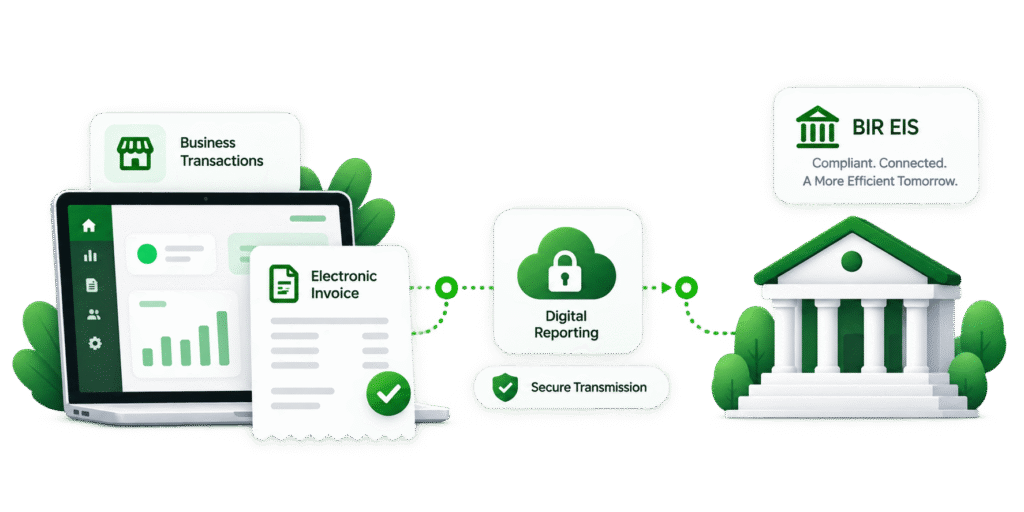
EIS was mandated under the TRAIN Law (Republic Act No. 10963) as part of the Philippines’ shift toward digital tax
administration. It enables eligible taxpayers to issue electronic invoices or receipts and transmit sales data directly to the
BIR, replacing or supplementing traditional paper-based processes.
EIS readiness involves both
the taxpayer and the teams
behind the process.
The practical work is cross-functional: leadership, finance, accounting, IT, and compliance all play a role in preparing systems and operations.

Mandated Taxpayer
Large Taxpayers
Prepare transaction systems, document scope, integration requirements, and assigned EIS owners.

Mandated Taxpayer
Exporters
Assess how sales and billing data can be transformed into compliant electronic reporting workflows.

Mandated Taxpayer
E-Commerce Entities
Connect digitally generated transactions with the required invoice, sales-data, and transmission processes.
The three EIS portals
Each portal serves a distinct role in issuing, certifying, or administering electronic invoicing and sales reporting.
TAXPAYER-FACING
EIS Taxpayers Portal
Used to issue e-receipts and e-invoices as a standalone facility or together with an existing system, with inquiry statistics, customer and item listing
functions.
TECHNICAL CERTIFICATION
EIS Certification Portal
Used to certify middleware that connects POS/CRM, CAS, or ASP systems to BIR and to support the application for a Permit to Transmit.
BIR INTERNAL
EIS Revenue Portal
Used internally by BIR revenue officers – taxpayers don’t access this portal directly.